Welcome back to The Movievaures Time Machine, where I revisit films from the past and see if they still hold up today. This time, I’m diving into one of the most iconic psychological thrillers of the ’80s: Fatal Attraction. Directed by Adrian Lyne and starring Michael Douglas, Glenn Close, and Anne Archer, this film was a cultural phenomenon upon release, sparking debates about infidelity, obsession, and morality.

But how does it hold up in 2025? Does its suspense still grip audiences, or has its portrayal of relationships and consequences aged poorly? Let’s find out.
Non-Spoiler Synopsis
Dan Gallagher (Michael Douglas) is a successful lawyer living a picture-perfect life with his wife, Beth (Anne Archer), and their daughter. However, everything changes when he has a passionate weekend affair with Alex Forrest (Glenn Close), a confident and seemingly independent woman. What begins as a fleeting indiscretion soon turns into a waking nightmare when Alex refuses to let go.
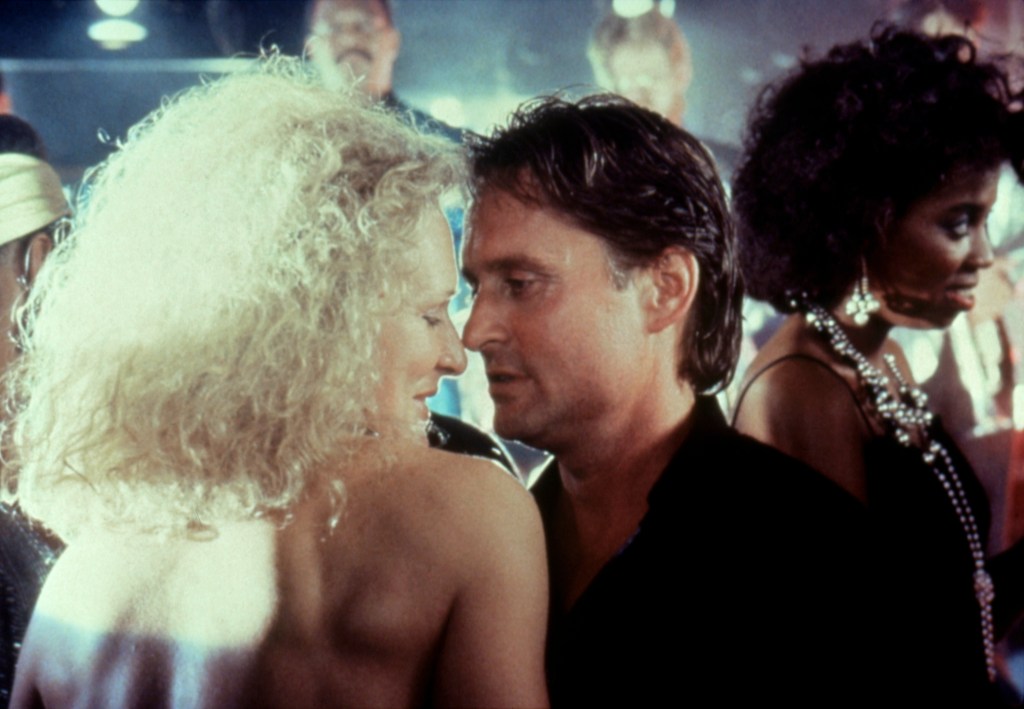
As Alex’s obsession intensifies, Dan finds himself trapped in a web of psychological torment, with his marriage, career, and even his life at risk. What follows is a nerve-wracking battle between a man trying to cover up his mistakes and a woman who refuses to be ignored.
A Look Back at the Film
When Fatal Attraction was released in 1987, it became an instant hit. The tension, the performances, and that infamous “bunny boiling” scene cemented it as a classic. Glenn Close’s portrayal of Alex remains one of the most memorable performances in thriller history, capturing both the vulnerability and the terrifying intensity of her character. Michael Douglas, on the other hand, played the role of a seemingly charming yet morally flawed man to perfection.

The suspense in this movie is incredible. Watching it today, I still found myself on edge, my heart racing with each confrontation between Dan and Alex. My husband and I were completely stressed out the entire time, which is a testament to how well the film builds tension. The slow descent into chaos, the unpredictability of Alex’s actions, and the escalating stakes make for a gripping experience.
However, while the film excels as a thriller, its messaging and implications haven’t aged as well.
What Hasn’t Aged Well
One of the biggest issues with Fatal Attraction today is its portrayal of Alex. The film leans heavily into the “crazy mistress” trope, making her out to be a purely deranged villain while Dan, the actual cheater, faces little to no real consequences. Of course, her actions are extreme and terrifying, but the lack of nuance in her character turns her into a cautionary tale rather than a fully fleshed-out person.
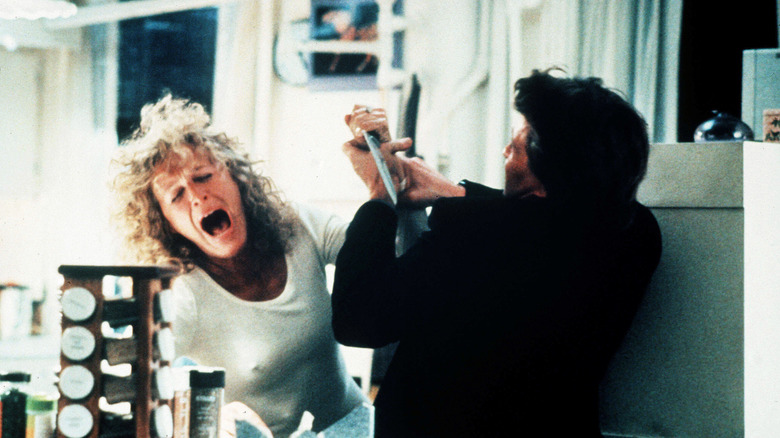
What’s even more frustrating is how the film resolves everything. Instead of Dan truly facing the repercussions of his betrayal, it’s his wife, Beth, who ultimately “fixes” the problem by taking matters into her own hands. The affair, the lies, the destruction—none of it seems to leave any lasting impact on their marriage. It’s almost as if the story is telling us that as long as the “crazy woman” is eliminated, everything can go back to normal. That kind of narrative feels outdated and even a bit irresponsible by today’s standards.
Public Reception Then and Now
At the time of its release, Fatal Attraction was both critically acclaimed and controversial. Audiences were captivated by its psychological horror elements, but it also sparked intense discussions about gender roles, infidelity, and mental illness. Glenn Close herself has spoken out about how the character of Alex was unfairly villainized and how she wished the film had given more depth to her struggles.

Today, the film is still respected as a masterclass in suspense, but it also faces more criticism for its dated approach to relationships and consequences. Modern audiences are more aware of the problematic ways women—especially women who don’t conform to traditional roles—have been portrayed in film, and Fatal Attraction is a prime example of that outdated storytelling.
My Time Machine Verdict
This is a tricky one. On one hand, Fatal Attraction is still a fantastic thriller. The performances are top-tier, the suspense is masterfully built, and the story keeps you hooked until the very end. In terms of pure cinematic quality, it has definitely passed the time machine test.

However, can I really praise a movie that treats infidelity so lightly while painting the woman as the sole villain? It’s hard to ignore how skewed the consequences are—Dan gets to walk away with his family intact, while Alex is reduced to nothing more than a psychotic obstacle to be eliminated. That kind of storytelling doesn’t hold up well in a modern context.

So, while I still enjoyed the film, I have to say it hasn’t aged well in terms of its messaging. It’s a thriller worth watching for the tension and performances, but it’s also one that deserves a more critical lens today.
Final Thoughts
Fatal Attraction remains one of the most intense psychological thrillers of all time, but its outdated gender dynamics and lack of real consequences for its male protagonist make it a frustrating watch in 2025. If you can look past that, it’s still a gripping and stressful ride—but it’s hard not to feel like the film could have been more nuanced in its portrayal of relationships and accountability.

What do you think? Does Fatal Attraction still hold up for you, or do its outdated themes ruin the experience? Let me know in the comments, and don’t forget to follow The Movievaures Time Machine on Instagram for more deep dives into past classics!
 The Movievaures
Leave a comment