
Welcome back to The Movievaures Time Machine, where I revisit the classics of the ’80s, ’90s, and early 2000s to see if they still shine or if time has tarnished their brilliance. Today’s pick is The Game (1997), a psychological thriller directed by the ever-mysterious David Fincher, starring Michael Douglas and Sean Penn. This movie is a rollercoaster of intrigue, paranoia, and mind-bending twists. Does it still hold up? Let’s dive in.
Non-Spoiler Synopsis
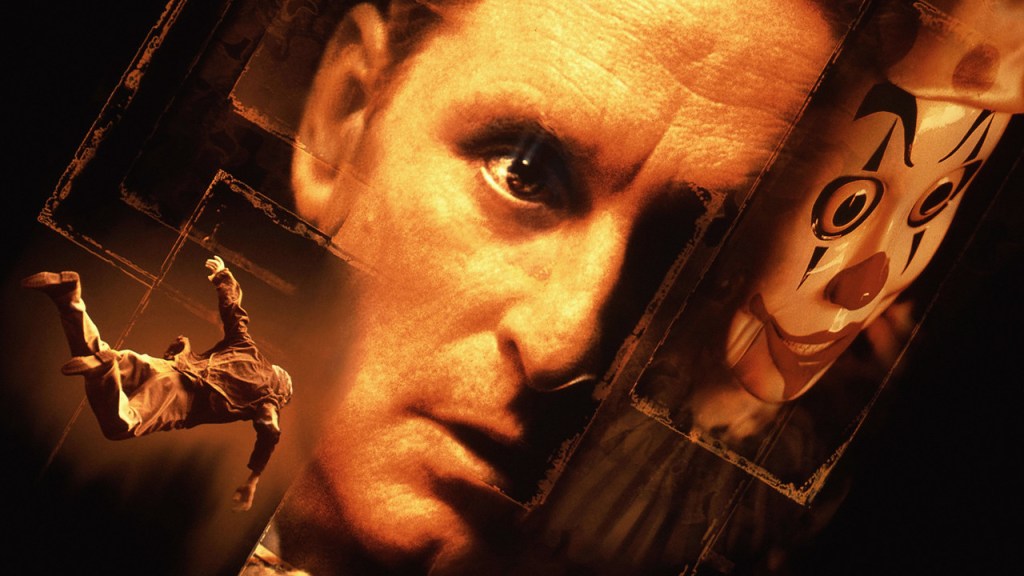
The Game tells the story of Nicholas Van Orton (Michael Douglas), a wealthy but emotionally detached investment banker living a meticulously controlled and lonely life. For his birthday, his estranged brother Conrad (Sean Penn) gifts him a voucher for a mysterious “game” run by a company called CRS (Consumer Recreation Services).
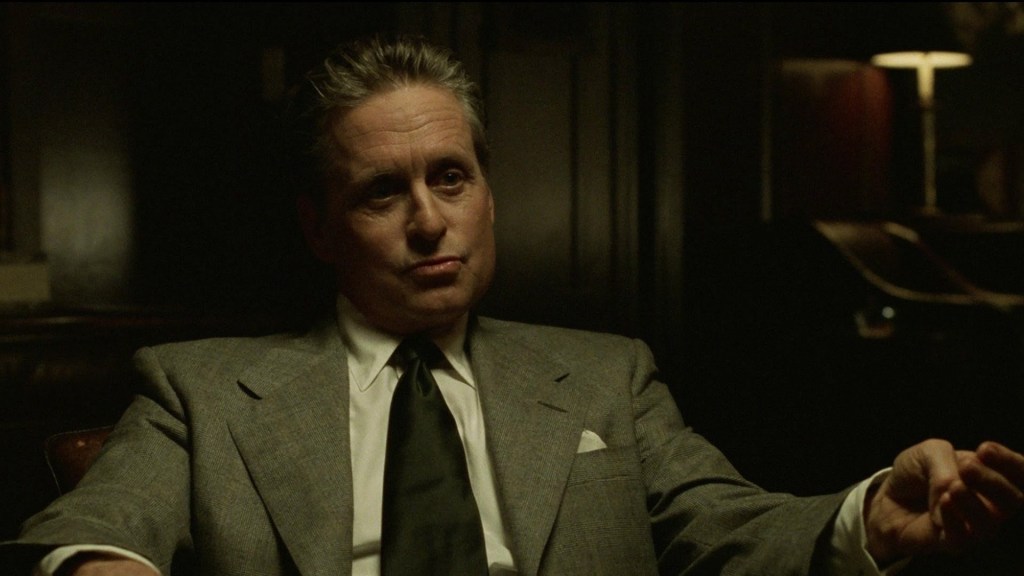
What begins as an unusual diversion quickly turns into a dangerous and mind-altering journey as Nicholas’s life spirals into chaos. Is it a prank, a conspiracy, or something far more sinister? As the lines between reality and fiction blur, Nicholas must confront his deepest fears and grapple with a harrowing question: Is he the player, or is he being played?
With its taut pacing, layered storytelling, and shocking twists, The Game is the kind of film that keeps you guessing until the very end.
A Look Back at the Film Itself
Directed by David Fincher between his cult classic Se7en (1995) and the revolutionary Fight Club (1999), The Game is a psychological thriller that showcases his mastery of suspense. The film oozes with a haunting atmosphere, blending opulent settings with a creeping sense of dread that mirrors Nicholas’s unraveling mind.

Michael Douglas is at his absolute best here, giving a performance that’s equal parts icy detachment and raw vulnerability. As Nicholas spirals deeper into the game, his transformation is utterly captivating, making the audience feel every moment of confusion, anger, and despair. Sean Penn’s role as the unpredictable younger brother adds just the right amount of tension and unpredictability to the story.
The production design and cinematography perfectly capture the late ’90s aesthetic—opulent yet gritty, polished yet unsettling. The film’s use of muted colors and shadowy frames enhances the themes of deception and paranoia, making the viewer feel as trapped as Nicholas.
Public Reception Then and Now
When The Game hit theaters in 1997, it was met with mostly positive reviews but wasn’t as universally praised as some of Fincher’s other works. Some critics admired its intricate plot and Douglas’s performance, while others felt its twists stretched believability. Despite its somewhat mixed reception, the film garnered a loyal following over the years and is now considered a hidden gem in Fincher’s filmography.

In today’s era of mind-bending thrillers and reality-blurring narratives, The Game has found renewed appreciation. Its exploration of identity, control, and the thin line between entertainment and manipulation feels eerily prescient in a world dominated by immersive experiences and social experiments.
My Time Machine Verdict
This hasn’t aged a bit. Yes, the small TV screens, massive computer monitors, and car phones are unmistakable relics of the ’90s. But none of that matters because the core of the film—the plot—remains as gripping and innovative as ever. The story’s ability to manipulate the viewer’s emotions and expectations is nothing short of masterful.

The pacing is mostly excellent, though I’ll admit it drags just a little in the middle. But even here, there’s a modern edge to the rhythm of the story that keeps it engaging. The intricate web of twists and turns feels fresh, even if you’ve seen it before. The genius lies in how the movie makes you question everything—what’s real, who’s trustworthy, and whether Nicholas (and you) are being outplayed.
Michael Douglas is unbelievably good, delivering a performance that’s as relevant today as it was back then. Watching his composed, high-powered character unravel in the face of chaos is both thrilling and oddly satisfying.
And let’s talk about the craziness of it all. The sheer audacity of CRS’s game—meticulously orchestrated down to the last detail—is more than original; it’s absolutely mind-blowing. How far they go to challenge Nicholas’s worldview, break his ego, and ultimately transform him is fascinating to watch. This concept of taking someone’s life apart and putting it back together, albeit through extreme methods, feels like a uniquely Fincher idea.
Final Thoughts
The Game is proof that a well-crafted psychological thriller can stand the test of time. Its themes of control, power, and self-discovery resonate just as strongly today as they did in 1997. While some aspects of the film may feel dated, the heart of the story—a man forced to confront his own identity and vulnerability—remains timeless.

What do you think? Have you seen The Game recently? Does it hold up for you, or do you feel it’s lost some of its impact over the years? Let me know in the comments, and don’t forget to follow The Movievaures Time Machine on Instagram for more nostalgic deep dives!
Let’s keep exploring the past to rediscover its treasures. Who knows what we’ll find next?
 The Movievaures
Leave a comment